


Design And Customization Of Special Pressure Vessels
Hangzhou Impact New Materials: A Professional Pressure Vessels Supplier
With the mission of accelerating the industrialization of fuel cells, our company is committed to promoting the development of hydrogen energy and fuel cell industries.
Professional Team
Our company brings together the backbone of the fuel cell field at home and abroad. The core R&D team comes from professional backgrounds such as "fuel cell + mass production vehicle" and has senior experience in the development and application of fuel cell stacks, fuel cell systems, and complete vehicles.
Variety of Products
Our new park has four major functions: R&D office, testing and verification, production and manufacturing, and hydrogen supply. The production line covers a full range of products such as membrane electrodes, fuel cell stacks, fuel cell systems, and hydrogen storage systems.
Multi-Field Practice
Our company has completed the product development of various fuel cell stacks and fuel cell systems with power ranging from 6kW to 260kW. These products are widely used in passenger cars, city buses, highway buses, light, medium and heavy trucks, forklifts, trailers and many other fields, and can be extended to distributed power generation, combined heat and power, ships, aviation and other fields.
Multiple International Certifications
Our company has obtained ISO 13485 quality system certification and CE certification of TUV Rheinland. We have also passed FDA registration and BSCI audit. In addition, our products have been sold to more than 60 countries and regions, and they have been inspected by many customers.


Pressure vessels are closed vessels that contain liquids, vapors, and gases at pressures significantly higher or lower than ambient pressure. They are widely used in various industries such as petrochemical, oil and gas, chemical and food processing. There are multiple standards and regulations governing all aspects of pressure vessels. The ASME Boiler and Pressure Vessel Code (BPVC) is the most popular set of universally recognized standards covering the design, construction, installation, testing, inspection, and certification of pressure vessel components.

Features of Pressure Vessels
High Durability
The pressure vessel is made of high-quality metal materials. This feature is critical in industrial environments where equipment is subjected to harsh conditions and rigorous use. These products are engineered to withstand the test of time and are immune to corrosion, rust, and other forms of damage. This longevity can result in significant cost savings for businesses, as the need for frequent replacement and maintenance is greatly reduced.
Superior Corrosion Resistance
Take stainless steel pressure vessels, for example, which offer inherent corrosion resistance. Industrial processes often involve the storage or transportation of corrosive substances, and the use of corrosive materials can lead to catastrophic failure. Its corrosion resistance is due to the presence of chromium, which forms a protective oxide layer on the metal surface, preventing the underlying steel from coming into contact with corrosive agents. This protection ensures container integrity even in the harshest environments.
Exceptional Strength-to-Weight Ratio
Efficiency in industrial operations is critical, and many high-quality pressure vessels excel in this area. They offer low weight while ensuring high strength. This superior strength-to-weight ratio simplifies transportation while reducing loads on the support structure and improving overall operational efficiency.
Temperature Tolerance
Industrial processes often involve extreme temperatures, and the right pressure vessels can withstand and handle such conditions. These products maintain structural integrity over a wide temperature range, whether withstanding the high temperatures involved in chemical reactions or maintaining the low temperatures required for cryogenic storage. This adaptability makes it ideal for many industrial applications.
Hygienic Properties
Maintaining strict hygiene standards is critical for the pharmaceutical, food processing and biotechnology industries. The smooth, nonporous surface of many pressure vessels, especially those made of stainless steel, inhibits the growth of bacteria and other microorganisms, making them suitable for applications where cleanliness is critical.
Sustainable and Environmentally Friendly
Sustainability is a growing concern in modern industrial practice. Many pressure vessel materials are inherently environmentally friendly because they are fully recyclable. It reduces environmental impact while also aligning with corporate sustainability goals.
Materials Selection for Pressure Vessels
Commonly used manufacturing materials for pressure vessels include the following:
Carbon steel is a steel with a higher carbon content, up to 2.5%. Carbon steel vessels are known for their high tensile strength and minimal wall thickness, making them suitable for a wide range of applications. They are for shock and vibration. However, carbon steel is difficult to bend and shape due to its high strength. Since it contains no chromium, it corrodes and rusts more easily than stainless steel.
Stainless steel is a steel with a high chromium content (up to 10.5 - 30%), a low carbon content and trace amounts of nickel. They are known for their excellent chemical, corrosion and weather resistance, which is attributed to their chromium content. A thin, inert chromium oxide film is formed on the surface to prevent oxygen from diffusing into the metal body. Like carbon steel, it also offers high strength with lower wall thickness. Easier to shape than carbon steel due to its increased ductility and elasticity.
Hastelloy, an alloy composed of nickel, chromium, and molybdenum, was the first alloy formulated by Haynes International, Inc. It is a material widely used in reactors, pressure vessels and heat exchangers in the petrochemical, energy and oil and gas industries. Can be used as nuclear reactor material. It has excellent corrosion resistance, crack resistance, antioxidant and reducing agent properties. It retains its strength at high temperatures. Due to its good ductility, it is easy to weld, form and shape. If properly maintained, they can last for decades, making them more cost-effective.
Nickel alloys have good corrosion resistance and weather resistance, and prevent thermal expansion. The addition of chromium to nickel alloys further improves their heat resistance. Pressure vessels made of nickel alloys are widely used in the oil and gas industry, cryogenic applications and other harsh environments. It also has a longer service life. However, its processing is difficult and its manufacturing cost is high. The purity of nickel alloys is important to preserve their strength and reliability.
Aluminum is known for its high strength-to-density ratio, which means it is both strong and lightweight at the same time. It is cheaper and easier to manufacture than stainless steel. It also has good corrosion resistance. Aluminum containers are commonly used for laboratory-scale applications. However, it is not suitable for high-pressure applications because it is less dense, only one-third that of stainless steel.
Titanium also offers high strength and rigidity with minimal wall thickness. It has good corrosion resistance and biocompatibility, and is non-toxic. It has a higher melting point than steel and aluminum, making it ideal for high-temperature applications. It also has high thermal conductivity, which facilitates efficient heat transfer and is an ideal material for heat exchangers.
Pressure Vessels Types
Process vessels (tanks) are designed to simply hold and store liquids and they are used for an integrated operation in petrochemical facilities, refineries, gas plants, oil and gas production facilities, and other facilities.
Autoclaves are large vessels that are pressurized and brought to high temperatures. They are usually cylindrical since the rounded shape is better able to safely withstand high pressures. Autoclaves are designed to hold items that are placed inside and then the lid is sealed.
They are the most durable vessels on the market which are capable of working under the heaviest loads and they provide the best resistance to corrosion, temperature, and pressure. The high-pressure vessels are usually made of stainless steel. Typical functions for the high-pressure vessel: high-speed mixers, chemical reactors, and supercritical extraction systems.
The expansion tanks are designed to adjust for changes in the amount of hot water in heating systems and changes in water flow rate, and to maintain the static pressure produced by the pump at the utilization level in sanitary hot water systems.
A heat exchanger is a device that transfers heat from one medium to another. Heat exchangers are most commonly used in industrial facilities such as iron and steel, petroleum, petrochemical, gas, power plants, food, pharmaceuticals, leather, textiles, air conditioning, ships, and marine industries.
In a water well system the pressure tank produces water pressure by using compressed air to force down on the water. Because of this pressure, water is forced out of the tank through the pipes inside your home when a valve is opened.
A vacuum tank is part of a system that filters air or liquids through suction, exhaust, pumping, or a combination of techniques. Vacuum cleaners use pressure to prevent contamination, purify, dehydrate, and even provide power.
They also known as ASME boilers, are any pressure vessel with an ASME stamp. The ASME stamp indicates the vessel has undergone inspection and meets stringent ASME VIII code standards. In addition, the ASME stamps offer end-users information about the ASME boiler and its manufacturer.
A thin-walled pressure vessel is one in which the skin of the vessel has a thickness that is much smaller than the overall size of the vessel, and the vessel is subjected to internal pressure that is much greater than the exterior air pressure.
Boilers: They are closed pressure vessels used to heat fluids, mostly water. These heated fluids are used for cooking, power generation, central heating, water heating, and sanitation.
Applications of Pressure Vessels
Oil and Gas Industry
The oil and gas industry often uses pressure vessels as receivers due to their ability to carry out physical and chemical processes at high temperatures and pressures. Although columns are similar in structure, their purpose may vary. Given the similar construction of the pressure vessel and column, it is likely that they were purchased from the same manufacturer. Taking materials as an example, we know that the oil and gas industry uses carbon steel and stainless steel as structural materials. All components, including vessel internals and distillation trays, together form a pressure vessel. The dimensions of these components are so complex that they require different specifications from the manufacturer and are only supplied by exclusive suppliers.
Chemical Industry
Critical chemical processes occur in these pressure vessels. Chemical tank requirements vary depending on their contents. Chemical processes can combine one or more products to create new products, splitting a single product into one or more products. Instructions for existing products may also be removed to create additional products. The chemical industry uses more than one type of pressure vessel at the same time.
Energy or Power Generation Industry
There are many reasons why the energy industry uses pressure vessels. One of the main reasons they are needed in the energy sector is to capture harmful gases. In refineries and metal plants, excess gas should also be stored. The nuclear power industry uses special pressure vessels called reactor pressure vessels, or RPVs. The reactor pressure vessel (RPV) of a nuclear power plant is a pressure vessel that contains the nuclear reactor coolant, core shield and reactor core. It has high reliability requirements and can withstand high temperature, high pressure and neutron irradiation, which makes the RPV an important equipment in a nuclear power plant. . However, it should be noted that not all power reactors have reactor pressure vessels.
Materials of Metric Roller Chain Sprocket
The following are the testing methods used to ensure the reliability of pressure vessels.
Visual Testing
Visual testing is a critical part of pressure vessel maintenance. Frequency of inspection must be every five years and before being put into service after installation or repairs. Trained inspectors inspect the interior and exterior of the container structure. Inspectors look for cracks, deformations, bubbling, fluid leaks, corrosion and other defects throughout the vessel's structure.
Ultrasonic Testing
Ultrasonic testing uses high-frequency sound waves to detect surface and subsurface defects and measure the wall thickness of pressure vessels. Ultrasonic waves are absorbed by the material and reflected back through the transducer as an electrical signal. If defects are present, the reflected waves will be disturbed.
Radiographic Testing
Radiographic testing uses X-rays or gamma rays to produce images of the surface and subsurface of a pressure vessel. Once the reflected light passes through any discontinuities, holes, and density differences it becomes distorted and exposed in the film. Radiographic testing is highly repeatable and requires minimal surface preparation. However, it is more expensive and requires highly skilled operators to handle the ionizing radiation.
Magnetic Particle Testing
Magnetic particle testing uses magnetic current to detect discontinuities on the surface of ferromagnetic materials. The inspector passes magnetic current through the pressure vessel between the two probes. If the material is free of defects, there will be no interruption in the flow of magnetic flux through the material. However, if there are cracks or any other defects, magnetic flux can leak out of the material. Once ferromagnetic particles (either in liquid suspension or powder form) are applied to the container, the defects will be more obvious.
Liquid Penetrant Testing
Liquid penetrant testing is commonly used on welds and panels. The inspector applies a small amount of liquid, called a penetrant, to areas where defects may exist. Allow the penetrant to settle after spraying, then wipe to remove excess penetrant from the surface. A developer is then used to reveal the penetrant that penetrated the crack.
Pressure Testing
ASME BPV codes require pressure testing to test for strength and leakage. There are two methods of pressure testing: hydrostatic pressure testing uses water as the medium, while pneumatic pressure testing uses air or nitrogen. For safety purposes, the latter is more preferred since compressed liquid contains less energy than compressed gas. It works by removing the air from the container and then filling the device with the test fluid until the internal pressure is 1.5 times the design pressure for hydrostatic testing and 1.2 - 1.5 times for pneumatic testing. The liquid is then left on continuously for at least 10 minutes. Inspectors then look for cracks and leaks in the system. Fluorescent dyes or tracers are used to determine the origin of the cracks. Pressure testing is typically performed during a shutdown or as a verification test after damage to the vessel has been repaired.
Design Factors to Consider When Choosing Pressure Vessel Materials
There are three key factors to consider when deciding which metal is best for a pressure vessel. They include internal factors, such as the purpose of the container, as well as external factors that may increase or decrease tank performance.
Environment
The location of a pressure vessel and its surrounding environment have a direct impact on its structural integrity. Ambient temperatures, vapors and liquids, flammable particles, and other hazards can damage seals and valves made of the wrong materials. This is an example of the need for industrialists to assess their work environment and identify threats before installing pressure vessels. Pressure vessel manufacturers will consider your environment and the forces or factors that may pose a threat to your pressure vessel. These considerations can determine the best metal for your pressure vessel, as well as other recommendations.
Load Strength
The load strength of a pressure vessel simply refers to the material's potential ability to withstand a load imposed on it without failure or damage. There are many types of loads (or loads). They include transverse loads (referring to vertical forces applied to the longitudinal axis) or torsional loads (referring to torsional effects caused by equally applied external forces in opposite directions). Additionally, there are different types of stress. These include compressive stress, which is the squeezing of a material, and materials with high compressive strength can best resist this squeezing. There is also tensile stress, which refers to the elongation of a material and is best resisted by materials with high tensile strength. In terms of load strength, the correct material for a pressure vessel depends on the type of loads and stresses the tank must withstand. Additionally, certain materials are more likely to conform to certain shapes required by different processes. Of course, this is relevant to the industrial applications that pressure vessels must serve.
Design Temperature and Pressure Thresholds
Pressure vessels also have temperature and pressure limits. There is a Maximum Allowable Working Pressure (MAWP), which is the maximum pressure a vessel can withstand at its weakest point at a given temperature during standard operation. There is also the maximum design temperature, which is the highest temperature the metal can withstand at a given MAWP. Excessive pressure or temperature can compromise the performance of a pressure vessel, not to mention worker safety. The risk of boiling liquid explosions increases significantly when tanks store liquids at temperatures and pressure levels that exceed their capacity. Therefore, it is important to calculate the pressure and temperature required for the application and build the pressure vessel to achieve these levels. Ideally, the tank should withstand slightly higher heat (or cold) and pressure than required by the application to provide a buffer zone.
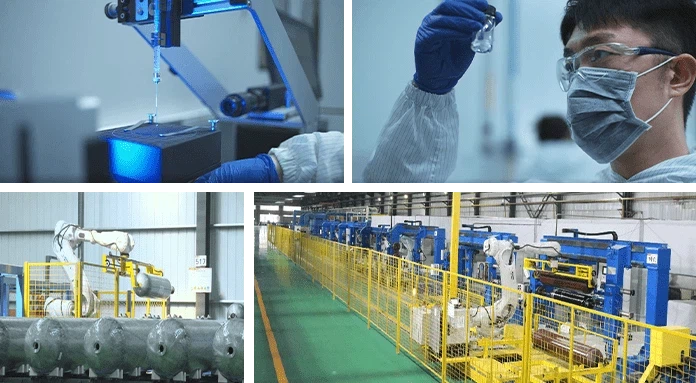
Our Factory
The following are our factory:


Frequently Asked Questions