


Hydrogen Fuel Cell Stack
Hangzhou Impact New Materials: A Professional Hydrogen Fuel Cell Stack Supplier
With the mission of accelerating the industrialization of fuel cells, our company is committed to promoting the development of hydrogen energy and fuel cell industries.
Professional Team
Our company brings together the backbone of the fuel cell field at home and abroad. The core R&D team comes from professional backgrounds such as "fuel cell + mass production vehicle" and has senior experience in the development and application of fuel cell stacks, fuel cell systems, and complete vehicles.
Variety of Products
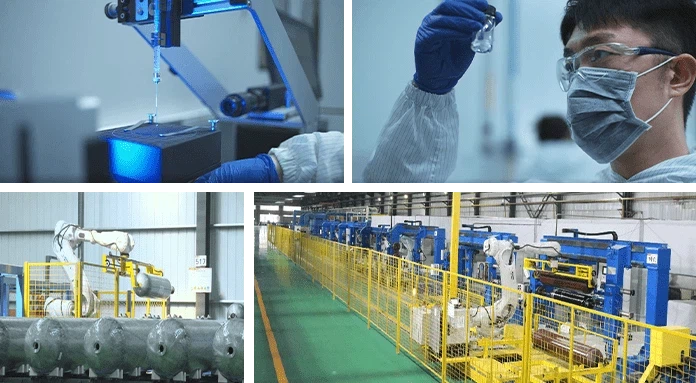
Our new park has four major functions: R&D office, testing and verification, production and manufacturing, and hydrogen supply. The production line covers a full range of products such as membrane electrodes, fuel cell stacks, fuel cell systems, and hydrogen storage systems.
Multi-Field Practice
Our company has completed the product development of various fuel cell stacks and fuel cell systems with power ranging from 6kW to 260kW. These products are widely used in passenger cars, city buses, highway buses, light, medium and heavy trucks, forklifts, trailers and many other fields, and can be extended to distributed power generation, combined heat and power, ships, aviation and other fields.
Multiple International Certifications
Our company has obtained ISO 13485 quality system certification and CE certification of TUV Rheinland. We have also passed FDA registration and BSCI audit. In addition, our products have been sold to more than 60 countries and regions, and they have been inspected by many customers.


A single fuel cell consists of a membrane electrode assembly (MEA) and two flow field plates, providing voltages of approximately 0.5 and 1V (too low for most applications). Just like batteries, individual cells are stacked to obtain higher voltage and power. This battery assembly is called a hydrogen fuel cell stack, or simply a stack. The hydrogen fuel cell stack is the core of the hydrogen fuel cell power system. It produces electricity in the form of direct current (DC) through an electrochemical reaction that occurs in a fuel cell.

Hydrogen Fuel Cell Stack Components
Fuel Cells
Fuel cells are the heart of the fuel cell stack, and are responsible for generating electricity through the electrochemical process. Each fuel cell consists of an anode, cathode, and electrolyte, as well as current collectors and separators, to facilitate the flow of ions and electrons.
Bipolar Plate
The bipolar plates are thin, flat plates that are sandwiched between the fuel cells in a hydrogen fuel cell stack. They serve as the structural backbone of the stack, as well as providing electrical conductivity and thermal management. Bipolar plates may be made of a variety of materials, including metals, polymers, and ceramics.
Gaskets and Seals
Gaskets and seals are used to create a hermetic seal between the fuel cells and bipolar plates in a fuel cell stack, preventing leaks and maintaining a constant gas flow. Gaskets and seals may be made of a variety of materials, including elastomers, graphite, and composite materials.
End Plate
The end plates are located at the top and bottom of the fuel cell stack, and provide structural support and sealing for the stack. They may also include provisions for fuel inlets and outlets, oxidant inlets and outlets, and coolant inlets and outlets.
Gas Manifold
Gas manifolds are channels or pipes that distribute fuel and oxidant to the fuel cells in a hydrogen fuel cell stack. They may also include provisions for gas purification and moisture removal.
Coolant Manifold
Coolant manifolds are channels or pipes that circulate cooling fluid through the stack to remove heat. They may also include provisions for temperature sensing and control.
Electrical Connectors and Cables
Electrical connectors and cables provide an interface between the fuel cell stack and external loads or energy storage systems. They may include connectors and cables for DC power, as well as inverters and control electronics for AC power.
Interfaces of a Hydrogen Fuel Cell Stack to Other Components
There are four interfaces between a hydrogen fuel cell stack and other components of a fuel cell system. These four interfaces are:
Fuel Inlet and Outlet
The fuel inlet and outlet allow hydrogen fuel to be supplied to and removed from the fuel cell stack. The fuel inlet is typically connected to a fuel supply system, which may include a compressor, filter, and storage tank. The fuel outlet is typically connected to a fuel exhaust system, which may include a gas purification unit and a stack scrubber to remove impurities and excess water.
Oxidant Inlet and Outlet
The oxidant inlet and outlet allow oxidant (typically air or oxygen) to be supplied to and removed from the hydrogen fuel cell stack. The oxidant inlet is typically connected to an air supply system, which may include a compressor and filter. The oxidant outlet is typically connected to an exhaust system, which may include a gas purification unit and a stack scrubber to remove impurities and excess water.
Coolant Inlet and Outlet
The coolant inlet and outlet allow a cooling fluid (typically water or glycol) to be circulated through the fuel cell stack to remove heat generated during the electrochemical process. The coolant inlet is typically connected to a cooling system, which may include a pump, heat exchanger, and radiator. The coolant outlet is typically connected to a return line that leads back to the cooling system.
Electrical Interface
The electrical interface allows the hydrogen fuel cell stack to be connected to an external load or energy storage system. The electrical interface may include connectors and cables for DC power, as well as inverters and control electronics for AC power.
Features of Hydrogen Fuel Cell Stack

High Power Output
The hydrogen fuel cell stack has a maximum power of 140kW and can be expanded to multiple power blocks. It is fully proven that it can provide sufficient power output for a complete hydrogen fuel cell system.
Wide Operating Temperature Range
The maximum operating temperature of the hydrogen fuel cell stack can reach 95 degrees Celsius, which means it can adapt to harsh high-temperature environments. In addition, it ensures excellent freezing start-up capabilities at low temperatures as low as -28 degrees Celsius.
Durability
The structure of the hydrogen fuel cell stack is made from high-quality reusable carbon plates, so it is very strong and resistant to compression. And its compact stacking design can effectively reduce the overall volume of the battery.
Specially Designed
Hydrogen fuel cell stack selection ensures a specifically designed and optimized fit for your power application. This means we can tailor a special fuel cell system to your specific needs.
Advantages of Hydrogen Fuel Cell Stack
Energy Efficiency
Hydrogen fuel cell stacks are very energy efficient. While a typical internal combustion engine is about 27 percent efficient, fuel cell stacks have efficiency ratings of 60 percent or more. For example, some fuel cell stacks have achieved 59% efficiency under real-world conditions. Although expensive, fuel cell stacks can convert more energy from fuel into usable electricity.
Environmental Benefits
As the climate crisis and the environment take center stage, fuel cell stacks are one of the cleanest forms of electricity generation. These renewable energy systems emit nothing but water and heat, making them very clean and green compared to traditional fossil fuels.
Fast Refuelling
Hydrogen fuel cell stacks offer one significant advantage over battery technology: rapid refueling. Charging a battery-powered commercial vehicle or truck can take 8 hours or more. In contrast, fuel cell-powered vehicles can be refueled in minutes. This advantage means commercial vehicles can operate longer each day, helping to offset the price of fuel cells in the long run.
Longevity
Hydrogen fuel cell stacks are extremely durable. While batteries and other renewable energy technologies wear out over time, fuel cell stacks are known for being durable, hard-wearing and able to withstand harsh conditions. This means you’ll get more value for your investment in the long run.
Versatility
Unlike batteries and other renewable energy sources, hydrogen fuel cell stacks are extremely versatile. Not only are these systems capable of operating in freezing conditions (-40 degrees Celsius), but they can also be used for stationary power generation, transportation or portable power.
Safety Measures for a Hydrogen Fuel Cell Stack
There are several safety measures that are typically taken in the design of fuel cell systems to ensure that hydrogen fuel cell stacks operate safely.
Gas Handling and Purification: Fuel cell systems typically include a range of measures to ensure that the fuel and oxidant gases are handled and purified safely. This may include filters to remove contaminants and impurities, compressors and regulators to control the gas flow and pressure, and gas purification units to remove moisture and other impurities.
Cooling Systems: Fuel cell stacks generate heat during the electrochemical process, and it is important to ensure that the stacks are cooled properly to prevent overheating and damage. Fuel cell systems typically include a cooling system to circulate a cooling fluid through the stacks and remove excess heat.
Electrical Safety: Fuel cell systems generate electricity, and it is important to ensure that the electrical components of the system are designed and installed safely. This may include measures such as grounding, over-current protection, and insulation to prevent electrical fires and shocks.
Structural Integrity: Hydrogen fuel cell stacks are typically subjected to a range of environmental and mechanical stresses, and it is important to ensure that the stacks are designed and constructed with sufficient structural integrity to withstand these stresses. This may include measures such as reinforcement, bracing, and protective coatings to prevent damage.
Emergency Shutdown: Fuel cell systems typically include an emergency shutdown system to automatically shut down the system in the event of a fault or malfunction. This may include sensors to detect hazardous conditions, as well as control electronics to trigger the shutdown.
Some Tips on Purchasing a Hydrogen Fuel Cell Stack
Choosing the Right Size
Making sure you choose the right size is an important factor to consider when purchasing a fuel cell. Choose the right size and you can use it perfectly in any application. Choose the wrong size and it will either not produce enough power or be too large, heavy and expensive for its intended use. Hydrogen-powered cars are a good example. While these trucks typically require at least 100kW to 150kW of power, some hydrogen-powered trucks use fuel cells with an output of around 450kW. Before purchasing a fuel cell stack, be sure to research the power usage of the target device you wish to power.
Consider Installing and Maintaining
Installing and maintaining a fuel cell stack can be a complex and challenging task. That’s why it’s crucial to hire a qualified and experienced installer. You should also consider any maintenance costs, as replacing specific components may require training. It is crucial to buy your stack from a professional seller who has a lot of customer support, as if any problem arises, they will resolve it on the spot.
Consider the Cost of Hydrogen
Depending on your location, hydrogen can be expensive or relatively cheap. For example, hydrogen is relatively cheap in China. Government incentives and subsidies, as well as private investment in production, have significantly reduced the cost of hydrogen. At the same time, hydrogen is quite expensive in Japan due to the high cost of electricity required for hydrogen generators (electrolyzers). Depending on the location, prices range from around per kilogram to more than per kilogram. Therefore, the cost of hydrogen in your area must be taken into account when calculating the actual price of operating a fuel cell stack.
Consider Infrastructure
Hydrogen fuel cell stacks require specialized infrastructure to operate on hydrogen fuel. While some places have extensive hydrogen fueling infrastructure (such as the US state of California), other places still lack the necessary connections, pipelines and hydrogen fuel delivery options required for fuel cell stack operation. This could be a big problem for individuals and organizations in remote areas where hydrogen fuel is difficult to obtain.
Hydrogen Fuel Cell Stack Operating Conditions
The operating parameters that affect fuel cell performance include operating pressure, operating temperature, reactant flow rate, and reactant humidity. Using the correct operating conditions for each parameter is critical to obtaining good fuel cell performance. The following sections discuss specifically how these parameters have an impact.
Operating Pressure
Hydrogen fuel cell stacks can operate at ambient pressure or pressurized conditions. Fuel cell performance generally improves with increasing pressure. However, the need for gas compression and storage can reduce the efficiency of the system. Pressurization of the fuel also changes the water management in each cell, so fuel cell operation must be analyzed from a systems perspective. Fuel cell parameters such as inlet fuel composition, gas diffusion layer (GDL) diffusivity, and flow field plate design may vary with reactant gas pressure. Since the saturation pressure does not change for a constant operating temperature, the mole fraction of an oxidizing agent such as oxygen can increase with increasing operating pressure.
Operating Temperature
Higher operating temperatures can improve the efficiency of hydrogen fuel cells. Fuel cells generate heat as a by-product of electrochemical reactions, and this heat must be controlled to maintain the desired temperature. The design operating temperature of a fuel cell affects many factors. Higher operating temperatures mean more product water is evaporated, so waste heat is converted to latent heat of evaporation, and less liquid water is pushed out of the fuel cell. Higher temperatures also mean faster dynamics and voltage gains that exceed the voltage losses caused by the negative thermodynamic relationship between open circuit voltage and temperature. Lower temperatures mean shorter warm-up time and lower thermomechanical stress on the fuel cell system.
Flow Rates of Reactants
The flow rate of reactants must be equal to or greater than the rate at which these reactants are consumed within the cell. Oxygen and hydrogen are introduced into the fuel cell system at the appropriate flow rates required for the required current. If the stoichiometry is to be kept constant, a variable flow system is required. Even in systems using atmospheric pressure, a pressure slightly above atmospheric is required to push gas through the flow field and force liquid water out. The additional pressure required is 0.1 to 2.0 psi (0.7 to 13.8 kPa) above atmospheric pressure.
Humidity of Reactants
In a PEM hydrogen fuel cell stack, the reactive gases need to be humidified before entering the cell to obtain high ionic conductivity of the membrane. Best performance is obtained when hydrogen is at 70% humidity. At high current densities, transport from the anode via electroosmotic resistance exceeds transport via reverse diffusion from the cathode to the anode, which leads to membrane dehydration and performance degradation. Low-humidity air can exacerbate this effect by reducing the rate of reverse diffusion at the cathode. Humidifying the anode gas can improve fuel cell performance. When air humidity is high, performance improves only slightly due to reverse diffusion of water at the cathode.
Our Factory
The following are our factory:


Ultimate Guide