


Hydrogen Fuel Cell System
Hangzhou Impact New Materials: A Professional Hydrogen Fuel Cell System Supplier
With the mission of accelerating the industrialization of fuel cells, our company is committed to promoting the development of hydrogen energy and fuel cell industries.
Professional Team
Our company brings together the backbone of the fuel cell field at home and abroad. The core R&D team comes from professional backgrounds such as "fuel cell + mass production vehicle" and has senior experience in the development and application of fuel cell stacks, fuel cell systems, and complete vehicles.
Variety of Products
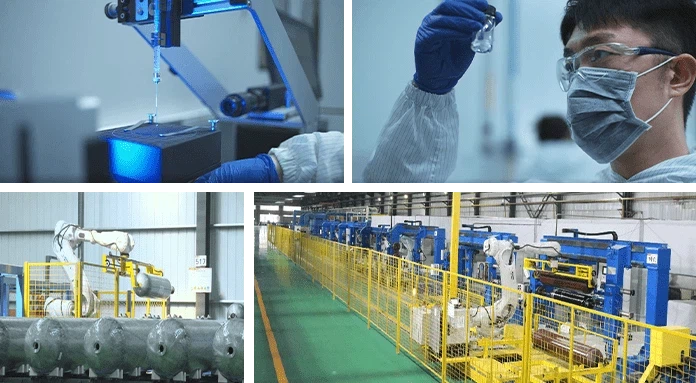
Our new park has four major functions: R&D office, testing and verification, production and manufacturing, and hydrogen supply. The production line covers a full range of products such as membrane electrodes, fuel cell stacks, fuel cell systems, and hydrogen storage systems.
Multi-Field Practice
Our company has completed the product development of various fuel cell stacks and fuel cell systems with power ranging from 6kW to 260kW. These products are widely used in passenger cars, city buses, highway buses, light, medium and heavy trucks, forklifts, trailers and many other fields, and can be extended to distributed power generation, combined heat and power, ships, aviation and other fields.
Multiple International Certifications
Our company has obtained ISO 13485 quality system certification and CE certification of TUV Rheinland. We have also passed FDA registration and BSCI audit. In addition, our products have been sold to more than 60 countries and regions, and they have been inspected by many customers.


Hydrogen fuel cell systems use the chemical energy of hydrogen to generate electricity. In this battery system, a catalyst at the anode separates the hydrogen molecules into protons and electrons, which take different paths to the cathode. Electrons pass through an external circuit, creating an electric current. It is a clean energy source whose only products and by-products are electricity, heat and water. Such fuel cells offer applications ranging from transportation to emergency backup power, and can power systems as large as power plants or as small as laptops.


Similar to a battery, a fuel cell is a device that converts energy stored in molecules into electricity through an electrochemical reaction. A typical hydrogen fuel cell system consists of two electrodes (anode and cathode) separated by an electrolyte membrane. Hydrogen enters the fuel cell through the anode. Here, the hydrogen atoms react with the catalyst and split into electrons and protons. Oxygen from the surrounding air passes through the cathode and into the other side. Positively charged protons pass through the porous electrolyte membrane to the cathode. Negatively charged electrons flow out of the battery and produce an electric current, which can be used to power an electric or hybrid propulsion system. At the cathode, protons and oxygen combine to form water.
Features of Hydrogen Fuel Cell System
Strong Motivation
The hydrogen fuel cell system is capable of providing sufficient power for continuous highway speeds. Hydrogen provides the energy needed to extend the driving range, while the medium-capacity battery powers dynamic performance in addition to energy recovery and plug-in functions.
Easy to Integrate
To maintain payload capacity, fuel cell systems are designed to be very compact. Therefore, the system can be integrated with existing vehicle platforms of many types, which means it can ensure maximum synergy. This fuel cell system operates in complex conditions and provides better durability.
Less Pollution
Hydrogen is the basic fuel for hydrogen fuel cell systems, but the cells also require oxygen to work. One of the biggest advantages of these fuel cells is that they generate electricity with very little pollution because the hydrogen and oxygen used to generate electricity combine to produce water as a by-product. Cells that use pure hydrogen as fuel contain no carbon at all.
High Efficiency
Other types of fuel cell systems include those that use hydrocarbon fuels such as natural gas, biogas, or methanol. Because hydrogen fuel cell systems use electrochemical reactions rather than combustion, they can achieve higher efficiencies than traditional energy production methods.
Renewable
Hydrogen is the most abundant element in the universe, and despite the challenges of extracting it from water, it is a uniquely abundant renewable energy source that is ideally suited to our future zero-carbon needs for combined heat and power.
Good Energy Efficiency
Hydrogen fuel cell technology provides high-density energy with good energy efficiency. Hydrogen has the highest energy content by weight of all common fuels. The gravimetric energy density of high-pressure gaseous and liquid hydrogen (about 120MJ/kg) is about three times that of diesel and liquefied natural gas, and the volumetric energy density is similar to that of natural gas.
Advantages of Hydrogen Fuel Cell System
Clean Energy
Hydrogen fuel cell systems provide an inherently clean energy source that does not adversely affect the environment during operation because the by-products are only heat and water. Unlike biofuels or hydropower, hydrogen does not require large areas of land to produce.
Greater Energy Efficiency
Hydrogen fuel cells are more efficient than many other energy sources, including many green energy solutions. This fuel efficiency allows more energy to be produced per pound of fuel. For example, traditional combustion power plants produce electricity with an efficiency of 33-35%, while hydrogen fuel cells produce electricity with an efficiency of up to 65%. The same is true for vehicles, where hydrogen fuel cells consume 40-60% of fuel energy while also reducing fuel consumption by 50%.
Almost Zero Emissions
Hydrogen fuel cells produce no greenhouse gas emissions like fossil fuels, reducing pollution and improving air quality. This means they have no carbon footprint when used.
Fast Charging
Charging times for hydrogen fuel cell power units are very fast, similar to those of conventional internal combustion engine (ICE) vehicles, and significantly faster compared to battery-powered electric vehicles. While an electric car can take anywhere from 30 minutes to a few hours to charge, a hydrogen fuel cell can charge in just 5 minutes.
Ideal for Use in Remote Areas
Where local conditions permit, obtaining hydrogen through local generation and storage could become an alternative to diesel power generation and heating in remote areas. Not only would this reduce the need for transportation fuel, but it would also improve the lives of people living in remote areas by providing pollution-free fuel sourced from readily available natural resources.
Long Use Time
Hydrogen fuel cells offer greater efficiency in terms of time of use. Hydrogen-powered cars have the same range as cars running on fossil fuels (about 300 miles), which is better than what electric vehicles (EVs) currently offer. Unlike regular EV batteries, hydrogen fuel cells are also not significantly affected by outside temperatures and do not deteriorate in cold weather. This advantage is further enhanced by the short charging time.
Applications of Hydrogen Fuel Cell System
Hydrogen fuel cell systems offer a range of applications, from powering our homes and businesses to mobile vehicles such as cars, buses and trains. The following are its specific applications:
Power
Hydrogen fuel cell systems serve as power sources for a variety of commercial, industrial and residential applications. These range from residences to spacecraft and research stations. Fuel cells are particularly useful in remote areas because they have no moving parts, meaning they are highly reliable and less likely to malfunction. Provides up to 99.9999% reliability under ideal conditions, equivalent to less than one minute of downtime every six years.
Cogeneration
The efficiency of fuel cells can be improved through cogeneration of heat and power. Hydrogen fuel cell systems are used to generate electricity, and the waste heat produced is used to heat buildings or power cooling systems. The efficiency of combined heat and power systems can reach 85% (of which 40-60% is electricity). However, these systems are costly, have a relatively short lifespan, and require space taken up by a hot water storage tank.
Transport
Hydrogen fuel cells can be used in a variety of transportation applications, from cars to buses, ships, trains and aircraft. Fuel cells are also being incorporated into motorcycles, bicycles and scooters. Fuel cells running on hydrogen consume about 40% less energy and emit 45% less greenhouse gases than internal combustion engines. Fuel cells have also been used in manned aircraft, often using a combination of technologies such as proton exchange membrane fuel cells and hybrid batteries as backup during testing. However, to become a truly viable option, many challenges surrounding hydrogen storage, transport and extraction need to be addressed.
Portable Power
Portable fuel cell systems are classified as systems that weigh less than 10 kilograms and generate less than 5 kilowatts of power. These types of batteries have a wide range of applications, powering small appliances from 1-50w as well as providing larger power generation from 1-5kW to remote areas. Smaller micro fuel cells are aimed at entering markets such as mobile devices and laptop computers, offering advantages such as energy density and weight savings compared to lithium-ion batteries. Larger scale portable power supplies hold promise for the recreational industry, the military and geographically remote industrial applications such as weather stations. However, market penetration requires further development of fuel cell technology to reduce costs.
Other Applications
There are several other applications for hydrogen fuel cells, including powering base stations and cellular sites, distributed generation, emergency power systems as backup in the event of other system failures, telecommunications, and base load power plants. It could also have applications in solar hydrogen fuel cell water heating, portable charging stations for small electronic devices, small heating equipment, container food preservation (depleting oxygen by generating electricity), and electrochemical sensors.
Some Tips on Purchasing a Hydrogen Fuel Cell System
Finding the Best Product for Your Needs
Consumers can choose the fuel cell technology that best suits their needs by exploring the different devices on the market. First, individuals must determine their application and requirements. Powering vehicles with emissions-free electricity requires large fuel cells. Individuals can invest in smaller fuel cell technology when powering small appliances. Different fuel cell technologies also offer different sustainability characteristics. Green hydrogen fuel cells are the most sustainable option on the market. Consumers may invest in green hydrogen fuel cells to shrink their carbon footprint.
Evaluate the Manufacturer's Technology Roadmap and Life Cycle
Another way to select the best fuel cell option is to evaluate the system's roadmap and life cycle assessment. Replacing gas-fired equipment with fuel cell technology can increase the success rate and longevity of the transition. Individuals can explore the long-term efficiency, maintenance costs and durability of fuel cell technology before investing. Without considering batteries, Class 1 and 2 fuel cell systems can cost between $32,000 and $34,000. Some fuel cells are more efficient and require less maintenance than other options. Investing in low-maintenance technology can lead to further cost savings over time.
Review a Supplier's Credentials and Qualifications
Individuals can also purchase favorable fuel cells by evaluating the qualifications of suppliers. Consumers looking to shrink their footprint may find fuel cell suppliers with Cradle-to-Cradle certification. Cradle-to-cradle products are more sustainable because they generate less waste over time and increase the recyclability of materials. Recyclable fuel cell materials can support a circular economy. Individuals can also evaluate a company's values and culture before investing in long-lasting fuel cell technology. Consumers are likely to be in contact with suppliers for extended periods of time, so finding a knowledgeable and supportive team is crucial.
Explore a Supplier's Service Options
Original equipment manufacturer (OEM) parts help suppliers easily repair damaged fuel cell technology. Hiring a fuel cell supplier that uses OEM parts can extend the life of your equipment. The installation and functionality of these components are consistent with the original design of the system. Finding a supplier that provides services throughout the life cycle of a fuel cell may improve the cost-efficiency of the technology. OEM parts often run more efficiently than third-party equipment. Repairing fuel cell technology through the original supplier may be more expensive, but the equipment may last longer.
Useful Tips for Using Hydrogen Fuel Cell System
To minimize the risks associated with hydrogen fuel, it is important to follow the following key safety measures:
Proper Storage
Hydrogen must be stored in containers specifically designed for this gas, and kept in well-ventilated areas away from heat, sparks, and flames.
Safe Transport
Hydrogen should only be transported in tanks and vehicles equipped with safety features such as pressure relief valves and explosion-proof construction.
Leak Detection
Hydrogen fuel cell systems should be equipped with leak detection devices to quickly detect and respond to any leaks.
Proper Fueling Procedures
Fueling hydrogen vehicles should only be done in well-ventilated areas, following the manufacturer’s recommended procedures.
Training and Education
Individuals who work with hydrogen fuel should receive proper training and education on its safe handling and use, including emergency response procedures.
Regular Maintenance
Hydrogen fuel cell systems should be regularly maintained to ensure they’re functioning properly and to identify any potential safety hazards.
Our Factory
The following are our factory:


FAQ