


Fuel Cell Hydrogen Cylinder
Hangzhou Impact New Materials: A Professional Fuel Cell Hydrogen Cylinder Supplier
With the mission of accelerating the industrialization of fuel cells, our company is committed to promoting the development of hydrogen energy and fuel cell industries.
Professional Team
Our company brings together the backbone of the fuel cell field at home and abroad. The core R&D team comes from professional backgrounds such as "fuel cell + mass production vehicle" and has senior experience in the development and application of fuel cell stacks, fuel cell systems, and complete vehicles.
Variety of Products
Our new park has four major functions: R&D office, testing and verification, production and manufacturing, and hydrogen supply. The production line covers a full range of products such as membrane electrodes, fuel cell stacks, fuel cell systems, and hydrogen storage systems.
Multi-Field Practice
Our company has completed the product development of various fuel cell stacks and fuel cell systems with power ranging from 6kW to 260kW. These products are widely used in passenger cars, city buses, highway buses, light, medium and heavy trucks, forklifts, trailers and many other fields, and can be extended to distributed power generation, combined heat and power, ships, aviation and other fields.
Multiple International Certifications
Our company has obtained ISO 13485 quality system certification and CE certification of TUV Rheinland. We have also passed FDA registration and BSCI audit. In addition, our products have been sold to more than 60 countries and regions, and they have been inspected by many customers.


Fuel cell hydrogen cylinders are tanks used to store compressed hydrogen. Hydrogen can be stored in gaseous and liquid forms. Gas storage tanks work by storing compressed hydrogen gas under pressure. The working principle of cryogenic storage tanks is to store liquid hydrogen, but in order to maintain the liquid state, the hydrogen needs to be stored under extremely cold conditions. General-purpose pressure vessels on the market adopt different structures and are currently divided into five categories, classified from I to IV according to quantity.

Features of Fuel Cell Hydrogen Cylinder
Durable
The fuel cell hydrogen cylinder has high durability and can meet the demanding requirements of large-scale and high-consumption hydrogen in the coming years. They are made of durable metal materials and are specially designed to ensure resistance to external corrosion and the effects of internal hydrogen.
Light
Compressed hydrogen is stored in lightweight composite cylinders, allowing for increased payload and large-scale storage and transportation. This can help you save a lot on shipping and labor costs in the long run.
Safe and Reliable
Fuel cell hydrogen cylinders comply with various international standards. At the same time, our in-house testing capabilities for most relevant requirements (hydraulics, leaks, burst testing, bonfire, penetration, penetration) ensure the highest safety and quality standards. They are reliable enough not to leak easily.
Customizable
Fuel cell hydrogen cylinders are available in a variety of sizes, from Type I to Type IV. You can find the right tank for your application from the manufacturer. Moreover, these tanks can also be customized to meet special needs.
Benefits of Fuel Cell Hydrogen Cylinder

Strong Security
Hydrogen is a clean energy source whose only byproduct of combustion is water vapor, but it can cause explosions if not stored properly. Fuel cell hydrogen storage cylinders offer a safer solution. Its sturdy structure and unique internal design effectively prevent leaks.
Easy to Transport
Hydrogen is more convenient to store and transmit than electricity, especially in areas far away from the grid. Through fuel cell hydrogen storage cylinders, hydrogen can be suitable for long-term storage and long-distance transportation, and can be released when needed to provide reliable energy supply.
Save Energy Costs
Fuel cell hydrogen storage cylinders can be used with renewable energy systems to convert excess energy into hydrogen and store it. This helps save energy costs and promotes wider adoption of renewable energy.
Strong Applicability
Fuel cell hydrogen storage cylinders are suitable for a variety of vehicles that rely on fuel cells, including cars, buses, trains, and airplanes. At the same time, it can also be used as a fuel reserve for low-noise power supplies for power supply, backup power, etc.
Types of Fuel Cell Hydrogen Cylinder

Hydrogen Cylinders (Metallic)
Hydrogen Cylinders (Metallic-Lined)
Hydrogen Cylinders (Fully Composite)
Hydrogen Cylinders (Fully Composite with Liner)
Hydrogen Cylinders(Linerless Composite)
Two Installation Methods for Fuel Cell Storage Cylinder
When placing the cylinder in the target application, the question arises of how to secure it in place. During operation, the pressurized hydrogen tank expands and contracts. Typically this is less than 5% of the volume or length, but this must be taken into account for safe and long-lasting operation.

Neck mounted Hydrogen Cylinder
Neck mounting means that the tank is tightly secured to the load-bearing structure of the neck, while all other support structures are loosely mounted to allow for expansion and contraction movement.

Strap mounted Hydrogen Cylinder
Strap mounting means that the tank is secured around the tank by wrapping straps and securing them to the structure to which the tank is to be secured. In turn, the straps need to accommodate estimated maximum expansion and contraction movements.
Choosing the Right Fuel Cell Hydrogen Cylinder
Regardless of the application, choosing the right gas cylinder is critical. The following are things to consider when selecting a gas cylinder for various applications.
Industrial – Onsite
For on-site industrial use, a simple Type 1 cylinder is often the most suitable and best value solution. In typical applications such as metal fabrication and welding, the cylinder does not need to be moved, so heavier weight is not a major consideration. Cost is usually the main factor. The lighter weight Type 2 or Type 3 cylinders may provide a better option for high-volume industrial applications where the cylinder needs to be refilled regularly and where it needs to be moved around the site.
Industrial - Portable
In portable industrial applications, such as mobile welding or mining use, cylinder weight becomes even more important. Type 1 cylinders may be suitable where limited portability is required, but Type 2 cylinders generally provide the best balance between cost and portability. If low weight and significant portability are required, a Type 3 cylinder may be the best choice.
Labs and Science
Type 1 and Type 2 cylinders are suitable for a variety of in-laboratory applications where portability is not required. For field work, equipment testing and calibration applications, Type 3 cylinders and in some cases Type 4 cylinders may be more practical due to their lighter weight.
Aerospace, Drones and Military
For any type of flight application, weight is important. Every kilogram counts, so depending on the application, Type 3, 4 and 5 cylinders are the most suitable. For drone use, Type 3 cylinders can provide a more resilient and robust solution than Type 4 cylinders. Type 3 cylinders are also best suited for the aviation industry and have full regulatory approval.
Medical Industry
For the medical industry, the main considerations in selecting a cylinder are capacity and weight. Type 1 cylinders are suitable for hospital use, but in 2020, Type 2 and 3 cylinders are preferred. For ambulance and portable/home oxygen use, lightweight cylinders offer real, practical benefits. Type 3 cylinders are lighter in weight and have higher capacity, making them the natural choice for these applications.
General Precautions When Handling Fuel Cell Hydrogen Cylinder
Use a Dedicated Regulator: Always use a regulator designed for use with hydrogen. Never try to repair or force a regulator that doesn't fit together easily. Avoid opening hydrogen cylinder valves to remove dust or dirt from fittings, as this practice (although acceptable for other gases) may cause spontaneous combustion.
Avoid Leaks: The fuel cell hydrogen storage cylinder must be secured in an upright position to avoid being knocked over. Use leak checking equipment to regularly check for hydrogen leaks.
Keep away from sources of ignition: Eliminate sources of ignition (e.g. open flames, equipment that may produce sparks, sources of static electricity) as much as possible during hydrogen operation.
Correct Way to Move: Before moving the hydrogen cylinder from its fixed position, replace the regulator with a protective valve cap. Never roll, drop or lift cylinder by protective cap.
Proper Storage: During storage and use, hydrogen bottles must be separated from oxidizing gases by at least 20 feet (NFPA). Protect cylinders from high temperatures and direct sunlight.
Ensure Ventilation: Due to the small size of the molecules, hydrogen can leak through holes that other gases cannot pass through. Always ensure adequate ventilation to handle the largest expected hydrogen leak or spill. Ventilation using large volumes of air can dilute small amounts of leaked hydrogen below the lower flammability limit of 4% in air.
Set Up an Alarm System: It is recommended to use a flammable gas detection alarm system and place the alarm close to the expected leak area. If hydrogen exceeds a specified concentration, an alarm is triggered, providing early warning of a possible leak. Be sure to calibrate your alarm/combustible gas detection system regularly as recommended by the manufacturer.
Professional Personnel Training: Combustible gas detector alarm systems cannot prevent leaks from occurring, nor can they indicate what measures should be taken. Therefore, on-site personnel must be trained in safe working practices and correct emergency response measures.
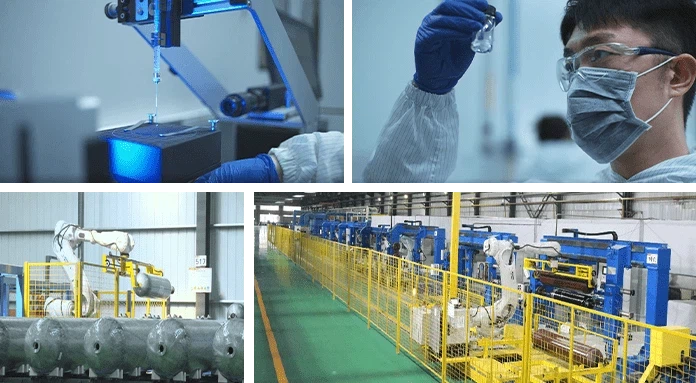
Our Factory
The following are our factory:


Frequently Asked Questions